

Hey there! As an engineering molding supplier, I'm super excited to chat with you about the different surface finish options in engineering molding. These finishes aren't just for looks; they play a huge role in how well the parts work and last. Let's dive right in!
1. Machined Finish
When we talk about a machined finish, it's all about precision. After the molding process, we use machining techniques like turning, milling, or grinding to get that smooth and accurate surface. This finish is great for parts that need tight tolerances, like in aerospace or automotive industries.
The advantage of a machined finish is its high accuracy. We can control the surface roughness to meet specific requirements. For example, if a part needs to fit precisely with another component, a machined finish ensures a perfect match. However, it can be a bit pricey because of the extra machining steps involved.
2. Polished Finish
A polished finish gives parts a shiny and smooth appearance. It's not only aesthetically pleasing but also has functional benefits. Polished surfaces are easier to clean and can resist corrosion better.
We achieve a polished finish by using abrasive materials to gradually remove small amounts of material from the surface. This process can be done by hand or with automated polishing machines. In industries like medical equipment or consumer electronics, a polished finish is often preferred because it gives a high - end look. But keep in mind, the polishing process can be time - consuming, especially for complex shapes.
3. Anodized Finish
Anodizing is a popular surface finish option, especially for Aluminum Alloy Processing. It creates a protective oxide layer on the surface of the aluminum, which makes it more resistant to corrosion and wear.
The anodizing process involves immersing the aluminum part in an electrolyte solution and passing an electric current through it. This causes the aluminum to oxidize, forming a hard and durable layer. There are different types of anodizing, such as clear anodizing, which preserves the natural look of aluminum, and colored anodizing, which can give the part a variety of colors. Anodized finishes are widely used in architectural applications, as well as in the manufacturing of electronic devices.
4. Powder Coated Finish
Powder coating is a dry finishing process where a fine powder is applied to the surface of the part. The powder is electrostatically charged, which makes it stick to the part. Then, the part is heated, and the powder melts and forms a smooth, durable coating.
One of the biggest advantages of powder coating is its environmental friendliness. It doesn't use solvents like traditional liquid paints, so there are fewer volatile organic compounds (VOCs) released into the air. Powder coated finishes are available in a wide range of colors and textures, and they provide excellent protection against corrosion, abrasion, and UV rays. This finish is commonly used in outdoor equipment, furniture, and automotive parts.
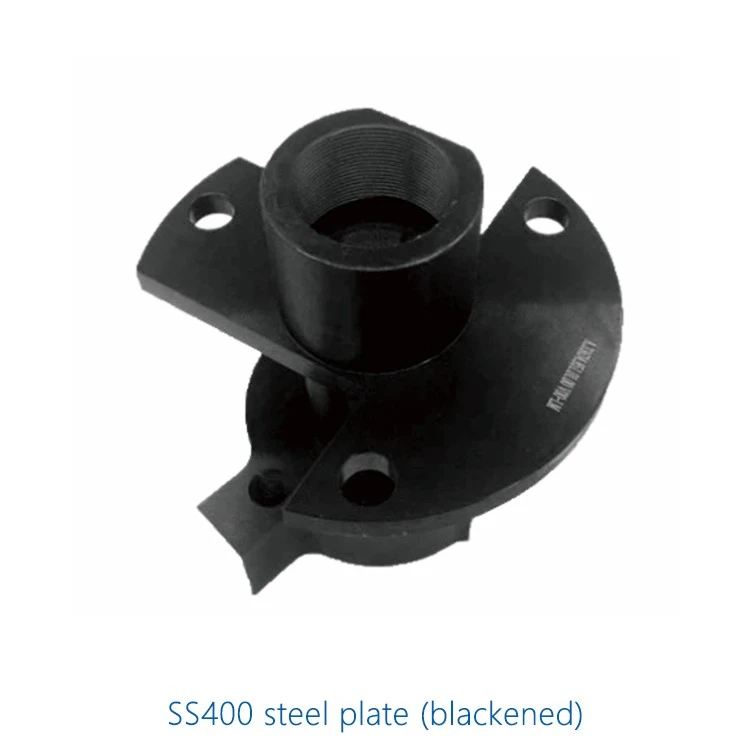

5. Plated Finish
Plating involves depositing a thin layer of metal onto the surface of the part. There are different types of plating, such as chrome plating, nickel plating, and zinc plating.
Chrome plating gives a bright and shiny finish, and it's very resistant to corrosion and wear. It's often used in automotive trim and decorative applications. Nickel plating provides a hard and smooth surface, which is good for parts that need to resist friction. Zinc plating is commonly used for corrosion protection, especially for Carbon Steel Alloy parts. The plating process can be complex and requires careful control of the plating bath and other parameters.
6. Shot Peened Finish
Shot peening is a process where small spherical particles, called shot, are propelled at high speed onto the surface of the part. This creates a compressive stress on the surface, which improves the part's fatigue resistance.
Shot peened finishes are commonly used in aerospace and automotive industries, where parts are subjected to high stress and cyclic loading. The shot peening process can also improve the surface roughness to some extent. However, it can change the dimensions of the part slightly, so it needs to be carefully controlled.
7. Chemical Etched Finish
Chemical etching is a process where a chemical solution is used to remove material from the surface of the part. This can create a pattern or texture on the surface.
Chemical etched finishes are often used for decorative purposes, as well as for marking parts with serial numbers or logos. It's a precise process that can be used on a variety of materials, including Copper Alloy Class. The advantage of chemical etching is that it can create complex patterns without the need for mechanical machining in some cases.
Choosing the Right Surface Finish
When it comes to choosing the right surface finish for your engineering molding parts, there are several factors to consider. First, think about the function of the part. If it needs to be corrosion - resistant, options like anodizing or plating might be a good choice. If it's for a high - end consumer product, a polished or powder - coated finish could be more suitable.
The cost is also an important factor. Some finishes, like machined or polished finishes, can be more expensive due to the additional processing steps. On the other hand, chemical etching or shot peening might be more cost - effective for certain applications.
The manufacturing process and the shape of the part also play a role. Some finishes are better suited for simple shapes, while others can handle complex geometries. For example, powder coating can be more difficult to apply evenly on parts with deep recesses or sharp corners.
Conclusion
As an engineering molding supplier, I know that choosing the right surface finish is crucial for the success of your project. Each finish has its own advantages and disadvantages, and the right choice depends on your specific requirements. Whether you need a corrosion - resistant finish for outdoor equipment or a high - end polished finish for a consumer product, we've got you covered.
If you're interested in learning more about our engineering molding services and the surface finish options we offer, I'd love to have a chat with you. Just reach out to us, and we can start discussing your project. Let's work together to create the perfect parts for your needs!
References
- Metals Handbook: Properties and Selection: Nonferrous Alloys and Pure Metals, ASM International.
- Surface Engineering for Corrosion and Wear Resistance, Elsevier.