

The thermal conductivity of die steel is a crucial property that significantly influences its performance in various industrial applications. As a die steel supplier, understanding this characteristic is essential for providing the best products to our customers.
Understanding Thermal Conductivity
Thermal conductivity is defined as the ability of a material to conduct heat. It is denoted by the symbol "k" and is measured in units of watts per meter-kelvin (W/(m·K)). A high thermal conductivity means that the material can transfer heat quickly, while a low thermal conductivity indicates that the material is a poor conductor of heat.
In the context of die steel, thermal conductivity plays a vital role in the manufacturing process. During the die - casting or forging operations, heat is generated due to the deformation of the metal and the friction between the die and the workpiece. If the die steel has low thermal conductivity, the heat will accumulate in the die, leading to high temperatures. This can cause thermal fatigue, which reduces the die's lifespan and can also affect the quality of the final product.

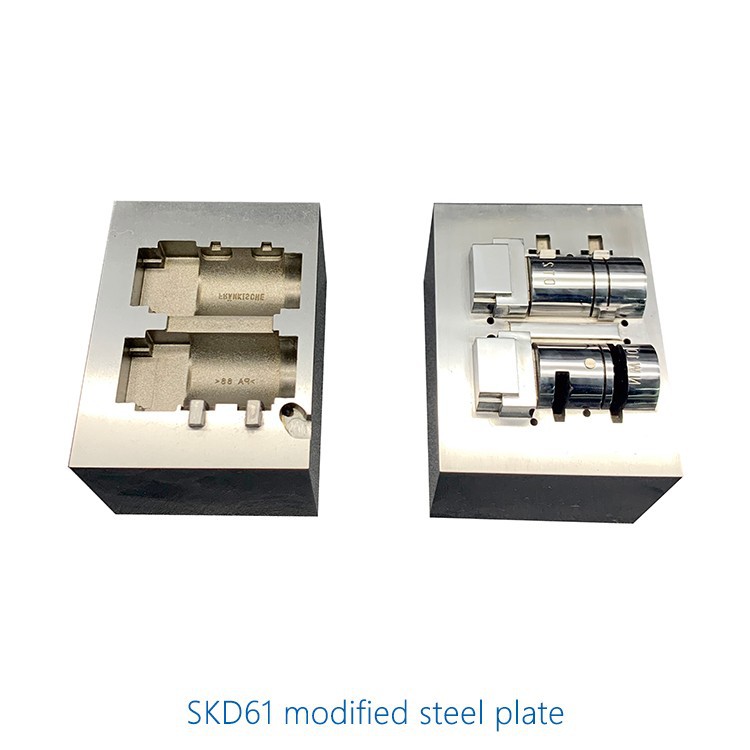
On the other hand, die steel with high thermal conductivity can efficiently dissipate the heat, maintaining a more stable temperature in the die. This results in less thermal stress, longer die life, and better - quality products.
Factors Affecting the Thermal Conductivity of Die Steel
Several factors can influence the thermal conductivity of die steel.
Chemical Composition
The chemical composition of die steel is one of the most significant factors. Different alloying elements have different effects on thermal conductivity. For example, carbon is a common element in die steel. As the carbon content increases, the thermal conductivity generally decreases. This is because carbon atoms disrupt the regular lattice structure of the steel, which hinders the movement of heat - carrying electrons.
Alloying elements such as chromium, molybdenum, and vanadium are often added to die steel to improve its hardness, strength, and wear resistance. However, these elements also tend to reduce the thermal conductivity. Chromium forms carbides in the steel, which can scatter heat - conducting electrons. Molybdenum and vanadium have similar effects, as they also contribute to the formation of complex carbide structures.
Microstructure
The microstructure of die steel also affects its thermal conductivity. A fine - grained microstructure generally has lower thermal conductivity compared to a coarse - grained one. This is because the grain boundaries in a fine - grained structure act as barriers to the movement of heat - carrying electrons.
Heat treatment processes can significantly alter the microstructure of die steel. For example, quenching and tempering can change the phase composition and grain size of the steel, thereby affecting its thermal conductivity. Quenching usually results in a martensitic structure, which has relatively low thermal conductivity. Tempering can transform the martensite into a more stable structure, such as tempered martensite or bainite, which may have different thermal conductivity properties.
Temperature
The thermal conductivity of die steel is also temperature - dependent. In general, the thermal conductivity of most metals decreases with increasing temperature. This is because at higher temperatures, the lattice vibrations of the metal atoms become more intense, which scatters the heat - carrying electrons more effectively.
Measuring the Thermal Conductivity of Die Steel
There are several methods for measuring the thermal conductivity of die steel.
Steady - State Methods
In steady - state methods, a constant heat flux is applied to the sample, and the temperature difference across the sample is measured. The thermal conductivity can then be calculated using Fourier's law of heat conduction. One common steady - state method is the guarded hot plate method. In this method, the sample is placed between a heated plate and a cooled plate. A guard heater is used to ensure that the heat flow is one - dimensional through the sample.
Transient Methods
Transient methods measure the thermal conductivity by observing the transient temperature response of the sample to a sudden heat input. One widely used transient method is the laser flash method. In this method, a short laser pulse is applied to one side of the sample, and the temperature rise on the other side is measured as a function of time. The thermal diffusivity of the sample can be calculated from the temperature - time curve, and then the thermal conductivity can be obtained by multiplying the thermal diffusivity by the density and specific heat of the sample.
Importance of Thermal Conductivity in Die Steel Applications
Die - Casting
In die - casting, molten metal is injected into a die cavity under high pressure. The die steel must be able to withstand the high temperatures and pressures during the process. High thermal conductivity is crucial in die - casting dies because it allows the heat from the molten metal to be quickly transferred away from the die surface. This helps to prevent overheating of the die, reduces the risk of thermal cracking, and improves the surface finish of the castings.
Forging
During forging, the die is subjected to repeated impacts and high - temperature deformation. Good thermal conductivity in the die steel helps to dissipate the heat generated during the forging process. This reduces the thermal stress on the die, extends its service life, and ensures the dimensional accuracy of the forged parts.
Our Offerings as a Die Steel Supplier
As a die steel supplier, we understand the importance of thermal conductivity in different applications. We offer a wide range of die steels with different thermal conductivity properties to meet the diverse needs of our customers.
Our die steels are carefully selected and processed to ensure optimal thermal conductivity. We use advanced manufacturing techniques to control the chemical composition and microstructure of the steel, thereby achieving the desired thermal conductivity.
In addition to die steel, we also provide Aluminum Alloy Processing and Copper Alloy Class services. These materials also have their own unique thermal conductivity characteristics, and we can help our customers choose the most suitable materials for their specific applications.
If you are interested in our Die Steel products or have any questions about thermal conductivity and its impact on your manufacturing process, please feel free to contact us. Our team of experts is always ready to provide you with professional advice and solutions. We look forward to discussing your requirements and working together to achieve your production goals.
References
- Callister, W. D., & Rethwisch, D. G. (2014). Materials Science and Engineering: An Introduction. Wiley.
- ASM Handbook Committee. (2000). ASM Handbook Volume 4: Heat Treating. ASM International.
- Touloukian, Y. S., & Ho, C. Y. (1970). Thermal Conductivity: Nonmetallic Solids. IFI/Plenum.