

Hey there! As an aluminum casting grain supplier, I've been knee - deep in the world of aluminum casting for quite some time. One of the most fascinating aspects that I've come across is the role of nucleation sites in aluminum casting grain formation. Let's dig into it!
What Are Nucleation Sites?
First off, what exactly are nucleation sites? Well, in simple terms, nucleation sites are like the starting points for the formation of new grains during the solidification process of aluminum casting. When molten aluminum starts to cool down, it needs a place to begin the transformation from a liquid to a solid. These nucleation sites provide that crucial starting point.

Think of it like a party. The nucleation sites are the cool spots where people start gathering. Without these spots, everyone (or in our case, the aluminum atoms) would just be aimlessly floating around in the molten state. They're typically tiny impurities, particles, or even surface irregularities within the molten aluminum or on the mold walls.
Why Are Nucleation Sites So Important?
The importance of nucleation sites in aluminum casting grain formation can't be overstated. They have a direct impact on the final properties of the aluminum casting.
Grain Size Control: One of the key things they do is control the grain size. When there are a lot of well - distributed nucleation sites, many small grains form. Smaller grains generally lead to better mechanical properties such as increased strength, hardness, and ductility. On the other hand, if there are few nucleation sites, larger grains will form, which can result in a casting that is more brittle and has lower overall performance.
Microstructure Homogeneity: Nucleation sites also help in achieving a more homogeneous microstructure. A uniform distribution of grains throughout the casting is crucial for consistent performance. With proper nucleation, we can avoid issues like segregation, where different parts of the casting have different compositions and properties.
How Do Nucleation Sites Work?
The process starts when the molten aluminum reaches its solidification temperature. At this point, the atoms in the molten metal start to arrange themselves into a more ordered, solid structure. The nucleation sites act as templates for this arrangement.
The atoms in the molten aluminum attach themselves to the nucleation sites, gradually building up the solid grains. This process is called heterogeneous nucleation because it occurs on a foreign surface (the nucleation site). There's also homogeneous nucleation, which happens without the presence of a foreign surface, but it's much less common in practical aluminum casting because it requires extremely high undercooling.
Factors Affecting Nucleation Sites
There are several factors that can affect the number and effectiveness of nucleation sites in aluminum casting.
Impurities and Additives: Adding certain elements or compounds to the molten aluminum can increase the number of nucleation sites. For example, titanium and boron are commonly used as grain refiners. They form fine particles that act as excellent nucleation sites, leading to a finer grain structure.
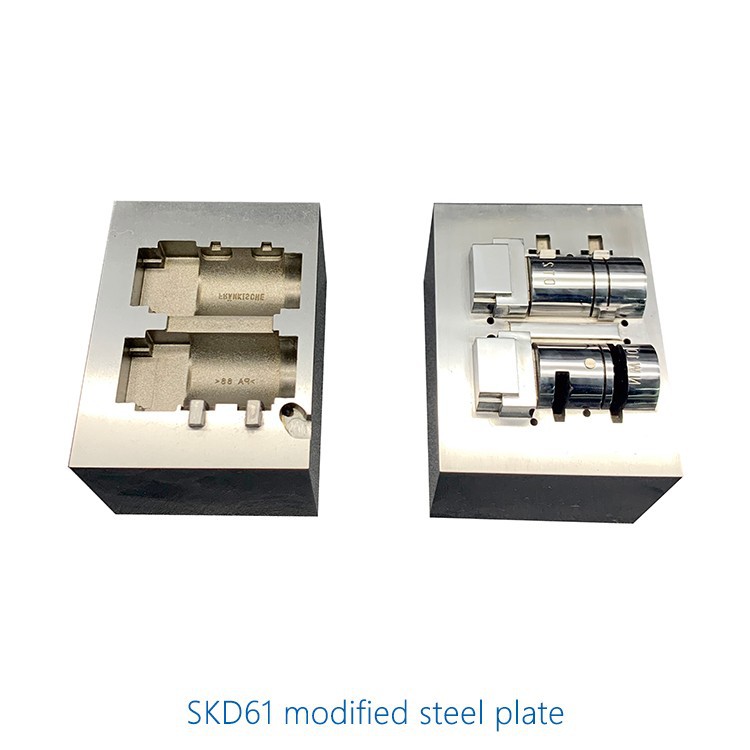
Mold Surface Conditions: The surface of the mold also plays a big role. A rough mold surface provides more potential nucleation sites compared to a smooth one. Additionally, the material of the mold can influence nucleation. For instance, Die Steel molds may have different nucleation characteristics compared to molds made from other materials.
Cooling Rate: The rate at which the molten aluminum cools down affects nucleation. A faster cooling rate generally increases the number of nucleation events. However, if the cooling rate is too fast, it can also lead to other issues such as thermal stresses and cracking.
Real - World Applications
In the real world, understanding the role of nucleation sites is crucial for producing high - quality aluminum castings.
In the automotive industry, where lightweight and high - strength components are in high demand, controlling the grain structure through proper nucleation is essential. Aluminum engine blocks, for example, need to have a fine and uniform grain structure to ensure good performance and durability.
The aerospace industry also benefits greatly from optimized nucleation. Components like aircraft frames and landing gear parts require precise control of the aluminum's mechanical properties, which can be achieved by managing the nucleation sites during casting.
Our Role as an Aluminum Casting Grain Supplier
As an aluminum casting grain supplier, we play a vital role in this whole process. We provide the materials and additives that can enhance the nucleation process. Our products are carefully formulated to ensure that they create the right number and type of nucleation sites in the molten aluminum.
We offer a wide range of grain refiners and additives that are designed to work with different types of aluminum alloys. Whether you're working with Copper Alloy Class or Aluminum Alloy Processing, we have the solutions to help you achieve the best possible grain structure in your castings.
Conclusion
So, there you have it! The role of nucleation sites in aluminum casting grain formation is a complex but incredibly important aspect of the casting process. By understanding how nucleation sites work and how to control them, we can produce aluminum castings with superior mechanical properties and performance.
If you're in the business of aluminum casting and are looking for high - quality grain refiners and additives, we'd love to talk to you. Whether you're a small - scale foundry or a large industrial manufacturer, we have the expertise and products to meet your needs. Reach out to us to start a conversation about how we can help you improve your casting process and achieve better results.
References
- Campbell, J. (2003). Castings. Butterworth - Heinemann.
- Flemings, M. C. (1974). Solidification Processing. McGraw - Hill.
- Gruzleski, J. E., & Katgerman, L. (1993). Grain refinement of aluminum and its alloys by heterogeneous nucleation and alloying. International Materials Reviews, 38(5), 193 - 219.