

Hey there! As a supplier of steel rule die punches, I often get asked about the heat treatment process for these essential tools. So, I thought I'd take a moment to break it down and share some insights.
First off, let's understand why heat treatment is so crucial for steel rule die punches. Steel rule die punches are used in a wide range of industries, from packaging to automotive, to cut and shape materials like paper, cardboard, plastics, and even thin metals. They need to be incredibly tough, wear-resistant, and have a high level of precision. Heat treatment helps achieve these properties by altering the microstructure of the steel.
The heat treatment process for steel rule die punches typically involves several key steps: annealing, quenching, and tempering.
Annealing
Annealing is the first step in the heat treatment process. It involves heating the steel to a specific temperature and then slowly cooling it. This helps to relieve internal stresses that may have been introduced during the manufacturing process, such as forging or machining. Annealing also makes the steel more ductile and easier to work with.
There are different types of annealing, but for steel rule die punches, full annealing is often used. In full annealing, the steel is heated to a temperature above its critical range, held there for a certain period to allow the microstructure to become uniform, and then cooled slowly in a furnace. This results in a soft, stable structure that is ready for further processing.
Quenching
After annealing, the next step is quenching. Quenching involves heating the steel to a high temperature again, but this time, it is cooled rapidly by immersing it in a quenching medium, such as oil or water. The rapid cooling rate causes the steel to transform into a hard, martensitic structure.
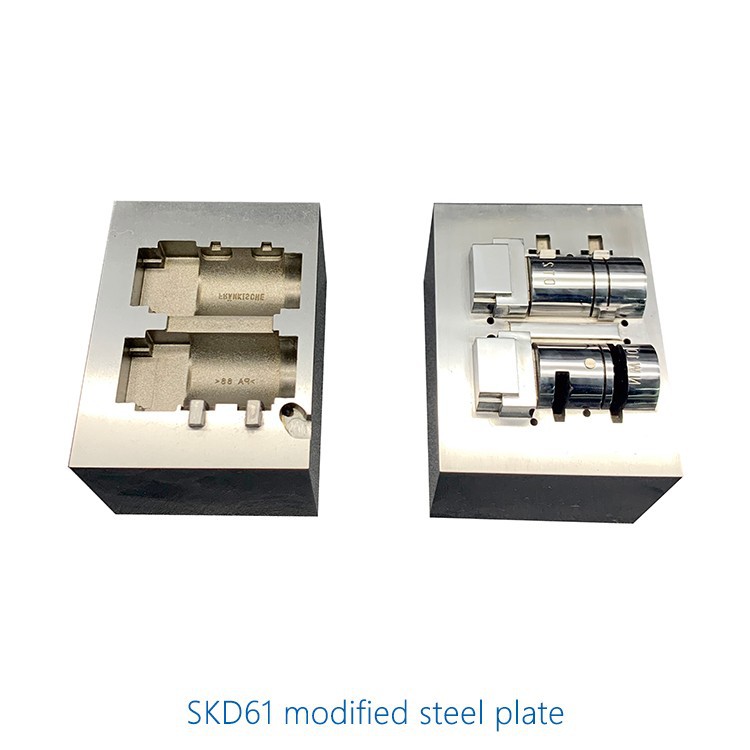

The choice of quenching medium depends on several factors, including the type of steel and the desired properties of the die punch. Oil quenching is often preferred for steel rule die punches because it provides a slower cooling rate compared to water quenching, which helps to reduce the risk of cracking. However, water quenching may be used for some steels that require a very high level of hardness.
Tempering
Quenching makes the steel extremely hard but also very brittle. To reduce the brittleness and improve the toughness of the steel rule die punches, tempering is carried out. Tempering involves reheating the quenched steel to a lower temperature, below its critical range, and holding it there for a specific time before cooling it slowly.
During tempering, the martensitic structure formed during quenching is partially transformed into a more stable and tougher structure called tempered martensite. The exact tempering temperature and time depend on the type of steel and the desired properties of the die punch. Generally, a higher tempering temperature results in lower hardness but higher toughness.
Additional Processes
In some cases, additional processes may be carried out after tempering to further enhance the properties of the steel rule die punches. For example, surface hardening techniques like nitriding or carburizing can be used to increase the wear resistance of the surface of the die punch. These processes involve introducing nitrogen or carbon into the surface layer of the steel, creating a hard, wear-resistant case.
Another important aspect of the heat treatment process is quality control. Throughout the entire process, strict quality control measures are implemented to ensure that the steel rule die punches meet the required specifications. This includes monitoring the temperature, time, and cooling rate during each step, as well as conducting various tests, such as hardness testing and microstructure analysis.
Importance of Heat Treatment
The heat treatment process plays a vital role in the performance and longevity of steel rule die punches. Properly heat-treated die punches have excellent wear resistance, which means they can withstand the high pressures and friction involved in the cutting and shaping process without wearing out quickly. They also have good toughness, which helps to prevent cracking and chipping during use.
In addition, heat treatment allows for precise control of the hardness and other properties of the die punches, which is essential for achieving the desired cutting performance. Whether you're cutting delicate paper or thick plastic, the right heat treatment can ensure that the die punch performs consistently and accurately.
Our Expertise as a Supplier
As a supplier of steel rule die punches, we have extensive experience in the heat treatment process. We use state-of-the-art equipment and follow strict quality control procedures to ensure that our die punches are of the highest quality. Our team of experts carefully selects the appropriate steel grade and heat treatment parameters based on the specific requirements of each customer.
We also offer a range of customization options, so you can get the die punches that are tailored to your exact needs. Whether you need a specific shape, size, or hardness, we can work with you to create the perfect solution.
Related Processing Services
In addition to steel rule die punches, we also offer other related processing services. For example, we provide Processing Of Engineering Plastics and Aluminum Alloy Processing. Our team has the expertise and equipment to handle these materials with precision and efficiency.
If you're in need of high-quality die steel, we also offer Die Steel that has been carefully selected and processed to meet the highest standards.
Contact Us for Procurement
If you're looking for reliable steel rule die punches or any of our other processing services, we'd love to hear from you. Whether you're a small business or a large corporation, we can provide you with the products and services you need.
Don't hesitate to reach out to us to discuss your requirements and get a quote. We're committed to providing excellent customer service and delivering products that meet or exceed your expectations.
References
- "Metallurgy for Dummies" by Jeff Hovanec
- "Heat Treatment of Steels" by George E. Totten and David Scott MacKenzie