

Hot die steel is a crucial material in the manufacturing industry, especially for applications involving high - temperature and high - stress environments such as die - casting, forging, and hot extrusion. As a hot die steel grades supplier, I understand the importance of adhering to industry standards to ensure the quality and performance of our products. In this blog, we will explore the industry standards for hot die steel grades, their significance, and how they impact the manufacturing process.
The Significance of Industry Standards
Industry standards for hot die steel grades serve as a benchmark for manufacturers, suppliers, and end - users. These standards ensure that the steel meets specific requirements in terms of chemical composition, mechanical properties, and heat - treatment capabilities. By following these standards, we can guarantee the quality and consistency of our products, which is essential for the success of various manufacturing processes.
For instance, in die - casting applications, hot die steel must withstand repeated thermal cycling, high - pressure injection of molten metal, and mechanical wear. Industry standards help in selecting the right grade of steel that can endure these harsh conditions without premature failure. This not only improves the efficiency of the die - casting process but also reduces production costs by minimizing downtime for die replacement.
Common Industry Standards for Hot Die Steel Grades
There are several well - recognized industry standards for hot die steel grades, including those set by the American Society for Testing and Materials (ASTM), the International Organization for Standardization (ISO), and the Japanese Industrial Standards (JIS).

ASTM Standards
ASTM has developed a comprehensive set of standards for hot die steel. For example, ASTM A681 covers alloy and tool steels, which include many hot die steel grades. This standard specifies the chemical composition, mechanical properties, and heat - treatment requirements for different types of tool steels. Some common ASTM - compliant hot die steel grades are H11, H12, and H13.
H13 is one of the most widely used hot die steel grades in the industry. It offers excellent toughness, thermal fatigue resistance, and wear resistance. According to ASTM A681, H13 steel typically contains 0.32 - 0.45% carbon, 0.80 - 1.20% silicon, 0.20 - 0.50% manganese, 4.75 - 5.50% chromium, 1.10 - 1.75% molybdenum, and 0.80 - 1.20% vanadium. These elements contribute to its high - temperature strength and resistance to thermal cracking.
ISO Standards
The ISO also has standards related to hot die steel. ISO 4957 classifies tool steels, including hot work tool steels. ISO standards provide a global framework for the specification and quality control of hot die steel grades. They ensure that the steel produced in different countries meets the same basic requirements, facilitating international trade and cooperation in the manufacturing industry.
JIS Standards
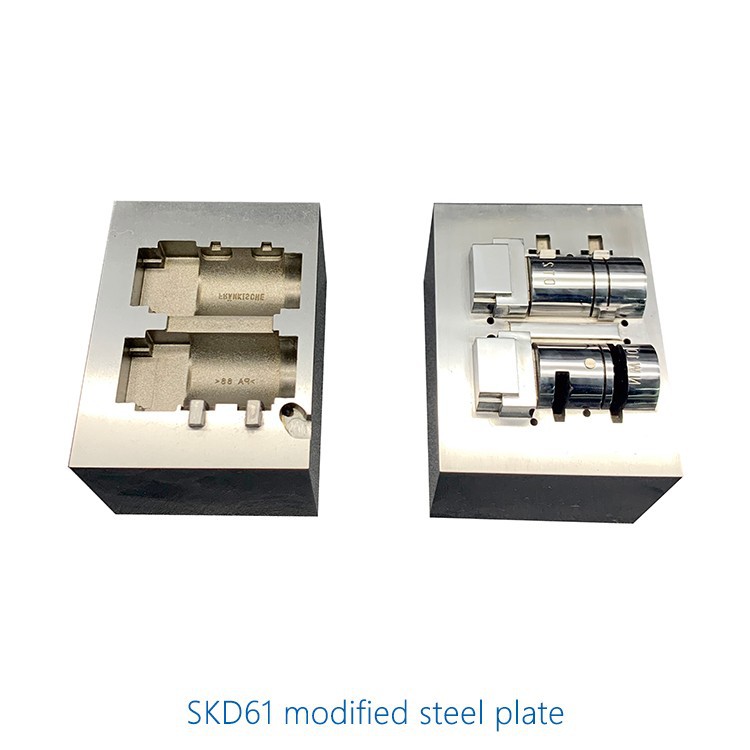
JIS standards are widely used in Japan and are also recognized globally. For hot die steel, JIS G 4404 specifies the requirements for alloy tool steels. Some JIS - compliant hot die steel grades, such as SKD61, are similar to ASTM H13 in terms of chemical composition and properties. SKD61 is commonly used in die - casting dies, forging dies, and hot extrusion dies due to its good thermal fatigue resistance and high - temperature strength.
Impact of Industry Standards on Manufacturing
Industry standards for hot die steel grades have a profound impact on the manufacturing process. They guide the selection of the appropriate steel grade for a specific application, ensuring that the die or tool can perform optimally under the given operating conditions.
Material Selection
Manufacturers rely on industry standards to choose the right hot die steel grade for their products. For example, in the automotive industry, where high - precision die - casting parts are required, H13 or SKD61 steel may be selected based on the standards' requirements for mechanical properties and heat - treatment capabilities. This helps in producing high - quality parts with consistent dimensions and surface finish.
Heat Treatment
Heat treatment is a critical step in the production of hot die steel tools. Industry standards specify the heat - treatment procedures, including annealing, quenching, and tempering, to achieve the desired mechanical properties. For example, ASTM standards for H13 steel recommend a quenching temperature in the range of 1000 - 1050°C followed by tempering at 550 - 650°C. Proper heat treatment according to the standards ensures that the steel has the right combination of hardness, toughness, and thermal stability.
Quality Control
Industry standards also play a vital role in quality control. Manufacturers use these standards to test and verify the chemical composition, mechanical properties, and microstructure of the hot die steel. Non - destructive testing methods, such as ultrasonic testing and magnetic particle testing, are often used to detect internal defects in the steel. By adhering to the standards, manufacturers can ensure that their products meet the required quality levels.
Our Role as a Hot Die Steel Grades Supplier
As a hot die steel grades supplier, we are committed to providing our customers with high - quality products that meet the industry standards. We source our steel from reputable mills and conduct rigorous quality control checks to ensure compliance.
We offer a wide range of hot die steel grades, including ASTM - compliant H11, H12, and H13, as well as JIS - compliant SKD61. Our team of experts can assist customers in selecting the most suitable steel grade for their specific applications. We also provide technical support on heat treatment and machining processes to help our customers get the best performance from our products.
In addition to hot die steel, we also supply other related materials such as Processing Of Engineering Plastics, Die Steel, and Copper Alloy Class. This allows us to offer comprehensive solutions to our customers' manufacturing needs.
Conclusion
Industry standards for hot die steel grades are essential for ensuring the quality, performance, and reliability of hot die steel products. They provide a common language for manufacturers, suppliers, and end - users, facilitating global trade and cooperation in the manufacturing industry. As a hot die steel grades supplier, we are dedicated to meeting these standards and providing our customers with the best possible products and services.
If you are in the market for high - quality hot die steel grades or have any questions about our products, please feel free to contact us for a detailed discussion. We look forward to working with you to meet your manufacturing needs.
References
- American Society for Testing and Materials (ASTM). ASTM A681 - 15 Standard Specification for Alloy and Tool Steels.
- International Organization for Standardization (ISO). ISO 4957:2018 Tool steels.
- Japanese Industrial Standards Committee (JIS). JIS G 4404:2006 Alloy tool steels.