

As a supplier of die steel material grades, I understand the critical importance of accurately identifying the quality of die steel. Die steel is used in a wide range of industries, from automotive manufacturing to consumer electronics, where the performance and durability of the dies directly impact the quality and cost - effectiveness of the final products. In this blog, I will share some key methods and factors to consider when identifying the quality of a die steel grade.
Chemical Composition Analysis
The chemical composition of die steel is the fundamental determinant of its properties. Different alloying elements are added to die steel to enhance specific characteristics such as hardness, toughness, wear resistance, and heat resistance.
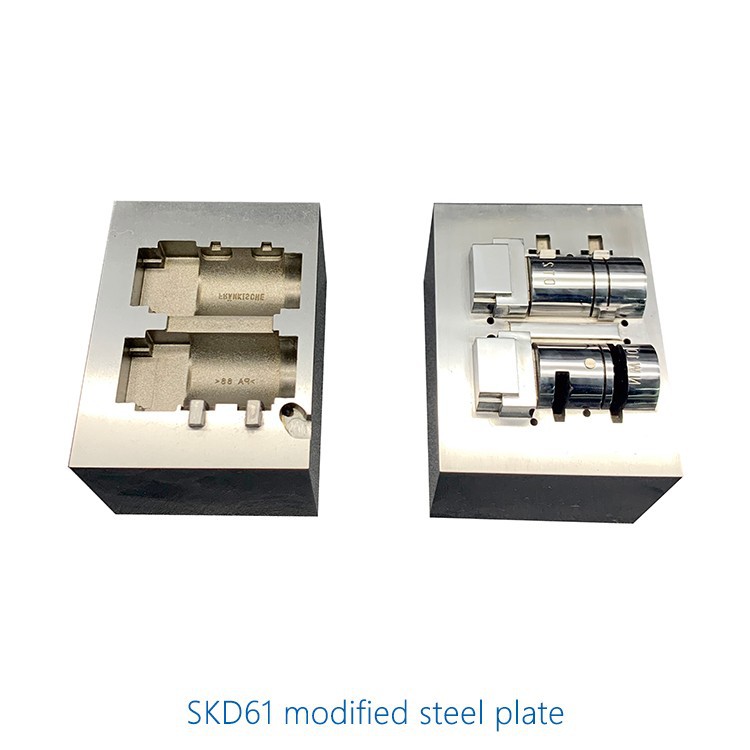

- Carbon (C): Carbon is a crucial element in die steel. It significantly affects the hardness and strength of the steel. Higher carbon content generally leads to increased hardness and wear resistance but may reduce toughness. For example, in cold - work die steels, a relatively high carbon content (around 1 - 2%) is often used to achieve excellent wear resistance for applications like blanking and forming operations.
- Chromium (Cr): Chromium improves the hardenability, corrosion resistance, and oxidation resistance of die steel. It forms carbides that enhance wear resistance and also helps in maintaining the hardness at elevated temperatures. Hot - work die steels typically contain a significant amount of chromium (e.g., 5 - 12%) to withstand the high - temperature and high - pressure conditions during forging and die - casting processes.
- Molybdenum (Mo): Molybdenum enhances the hardenability, strength, and toughness of die steel. It also improves the steel's resistance to temper softening, making it suitable for applications where the die is subjected to repeated heating and cooling cycles. In many high - performance die steels, molybdenum is added in the range of 1 - 5%.
- Vanadium (V): Vanadium forms fine carbides that contribute to the wear resistance and grain refinement of die steel. It also improves the steel's hot - hardness and toughness. High - speed tool steels and some advanced die steels contain vanadium to enhance their cutting and forming capabilities.
To analyze the chemical composition of die steel, advanced techniques such as spectroscopy can be used. Spectroscopic analysis can accurately determine the concentration of various elements in the steel sample. By comparing the measured composition with the specified composition of the die steel grade, we can ensure its quality. For more information on the processing of materials related to die steel, you can visit Processing Of Special Materials.
Microstructure Examination
The microstructure of die steel has a profound influence on its mechanical properties. A proper microstructure ensures the desired combination of hardness, toughness, and wear resistance.
- Grain Size: A fine - grained microstructure generally provides better toughness and mechanical properties compared to a coarse - grained one. In die steel, grain refinement can be achieved through proper heat treatment processes. For example, during the austenitizing stage of heat treatment, controlling the heating temperature and time can help in obtaining a fine - grained structure. A fine - grained die steel is more resistant to cracking and deformation under stress.
- Carbide Distribution: The distribution of carbides in the steel matrix is also crucial. Uniformly distributed carbides enhance wear resistance, while an uneven or coarse carbide distribution can lead to premature failure of the die. In some die steels, special heat treatment and alloying techniques are used to ensure a homogeneous carbide distribution. For instance, in high - alloy die steels, a process called spheroidizing annealing can be used to transform the carbide structure into a more uniform and spherical shape.
Microstructure examination can be carried out using optical microscopy or electron microscopy. These techniques allow us to observe the grain size, carbide distribution, and other microstructural features in detail. By comparing the observed microstructure with the standard microstructure for the specific die steel grade, we can assess its quality.
Hardness Testing
Hardness is one of the most important properties of die steel. It determines the steel's ability to resist wear, deformation, and indentation. Different types of hardness tests can be used depending on the application and the size of the die steel sample.
- Rockwell Hardness Test: This is a widely used hardness test for die steel. It measures the depth of penetration of an indenter into the steel sample under a specific load. The Rockwell hardness scale provides a quick and convenient way to assess the hardness of die steel. For cold - work die steels, a high Rockwell hardness (e.g., HRC 60 - 65) is often required to ensure good wear resistance.
- Brinell Hardness Test: The Brinell hardness test uses a spherical indenter to create an indentation in the steel sample. It is suitable for testing large - sized die steel components or materials with a relatively coarse microstructure. The Brinell hardness number (BHN) gives an indication of the steel's overall hardness and toughness.
- Vickers Hardness Test: The Vickers hardness test uses a diamond pyramid indenter to measure the hardness. It is a more precise test and can be used for small - sized samples or for measuring the hardness of different microstructural regions in the die steel.
By performing hardness tests at different locations on the die steel sample, we can ensure that the hardness is uniform throughout the material. Any significant variation in hardness may indicate problems such as improper heat treatment or the presence of impurities.
Impact Toughness Testing
In addition to hardness, impact toughness is also a critical property of die steel. Impact toughness measures the ability of the steel to absorb energy and resist fracture under sudden impact loading. Die steels used in applications such as forging and die - casting need to have good impact toughness to withstand the high - energy impacts during the forming process.
- Charpy Impact Test: The Charpy impact test is a common method for measuring the impact toughness of die steel. In this test, a notched specimen is struck by a pendulum, and the energy absorbed during the fracture is measured. A higher impact energy indicates better impact toughness. The test results can be used to evaluate the suitability of the die steel for specific applications.
- Izod Impact Test: Similar to the Charpy test, the Izod impact test also measures the impact energy of a notched specimen. However, the specimen is held in a different orientation during the test. The Izod test is often used for smaller or more irregularly shaped die steel samples.
Impact toughness testing helps in identifying any brittleness in the die steel, which could lead to premature failure under impact loading conditions.
Wear Resistance Evaluation
Wear resistance is a key property for die steel, especially in applications where the die comes into contact with the workpiece during forming or cutting operations. There are several methods to evaluate the wear resistance of die steel.
- Pin - on - Disk Test: In this test, a pin made of the die steel is rubbed against a rotating disk under a specific load. The amount of wear on the pin is measured over a certain period of time. The wear rate can be calculated, which gives an indication of the die steel's wear resistance. This test can simulate the sliding wear conditions that occur in many die - forming processes.
- Abrasion Wear Test: Abrasion wear tests involve rubbing the die steel sample against an abrasive material. The wear volume or mass loss of the sample is measured to evaluate its abrasion resistance. This type of test is relevant for applications where the die is subjected to abrasive wear, such as in metal - cutting or stamping operations.
By evaluating the wear resistance of die steel, we can select the most suitable grade for a particular application and ensure the long - term performance of the dies. For more details on the processing of materials related to die steel applications, you can visit Processing Of Engineering Plastics.
Heat Resistance Assessment
For hot - work die steels, heat resistance is a crucial property. These steels need to maintain their hardness, strength, and dimensional stability at elevated temperatures.
- Hot - Hardness Test: The hot - hardness test measures the hardness of the die steel at high temperatures. The sample is heated to a specific temperature, and the hardness is measured using a suitable hardness testing method. A good hot - work die steel should retain a significant portion of its room - temperature hardness at the operating temperature.
- Oxidation Resistance Test: Oxidation resistance is also important for hot - work die steels. In an oxidation resistance test, the die steel sample is exposed to high - temperature air for a certain period of time, and the amount of oxidation (e.g., weight gain due to oxide formation) is measured. A die steel with good oxidation resistance will form a protective oxide layer that prevents further oxidation and degradation of the material.
Heat resistance assessment helps in ensuring that the hot - work die steel can withstand the high - temperature conditions in applications such as forging, die - casting, and hot - stamping.
Conclusion
Identifying the quality of a die steel grade requires a comprehensive approach that involves chemical composition analysis, microstructure examination, hardness testing, impact toughness testing, wear resistance evaluation, and heat resistance assessment. As a die steel material grades supplier, I am committed to providing high - quality die steel products that meet the strictest quality standards.
If you are in the market for die steel and need to ensure the quality of the materials for your specific applications, I encourage you to reach out for a detailed discussion. We can work together to select the most suitable die steel grade and conduct the necessary quality tests to guarantee its performance. For more information on die steel, please visit Die Steel.
References
- ASM Handbook, Volume 1: Properties and Selection: Irons, Steels, and High - Performance Alloys
- Metals Handbook Desk Edition, Third Edition
- "Die Materials and Heat Treatment" by R. A. Grange and H. E. Boyer